




One of the most deep-rooted debates in Islamic history should have been not about how prayer is performed, but about what prayer means. Yet for centuries, the opposite process has unfolded: details such as where to hold one's hands, how many rak'ahs to perform, and which supplication to recite in which order have come so far to the fore that the spirit of worship has faded in the shadow of these disputes. Today, millions of Muslims perform prayer in its outward form, yet cannot feel in their lives the transformation promised in verse 45 of Surah Al-Ankabut — that is, keeping away from indecency and evil. This contradiction is a sign not of superficial practice, but of a deep lack of understanding. So what does the Quran actually say about prayer? And how do the social obstacles encountered today shape this act of worship? The Purpose of Prayer: A Transformation, Not Merely a Ritual The Quran defines prayer not as a checklist of duties, but as a dynamic process that transforms a person from within. Verse 45 of Surah Al-Ankabut is unmistakably clear on this: prayer is a force that keeps a person away from indecency and evil. This definition is highly significant, for it does not confine the effect of prayer to the prayer mat alone. A person who prays is expected to carry the imprint of that worship into their daily life — in their relationships, their honesty, and their sense of justice. If someone performs their prayers yet experiences no change in their life, this indicates that the worship has not moved beyond outward form. In verse 3 of Surah Al-Baqarah, when the qualities of the righteous are enumerated, prayer and spending for others are mentioned side by side. This pairing is no coincidence. In the Quran's view, worship and social conscience are two inseparable wholes. The hands that prostrate before God are also the hands that can reach out to those in need. The tongue that remembers God in prayer is the tongue that speaks truth in daily life. The Framework Defined by the Quran: What Was Commanded, What Was Left Open? The Quran has clearly established the fundamental elements of prayer: standing (qiyam), bowing (ruku'), and prostrating (sujud). In verse 77 of Surah Al-Hajj, the command is given to "bow down and prostrate"; in verse 19 of Surah Al-Alaq, "prostrate and draw near" is ordained. The condition of purity is explained in detail in verse 6 of Surah Al-Ma'idah. Turning toward the qiblah is commanded as a symbol of unity in verse 150 of Surah Al-Baqarah. What is striking, however, is this: the Quran does not regulate in detail how long these movements should last, in what sequence they should be repeated, which supplications should accompany them, or how many rak'ahs they should consist of. This silence is not a deficiency. It is a conscious flexibility and mercy that God has granted to His servants. The essence of worship should be sought not in the flawless imitation of specific forms, but in sincerity, in the purity of intention, and in a genuine turning toward God. Number of Rak'ahs and Surahs to Be Recited: Tradition or Necessity? According to widespread current practice, the morning prayer consists of two rak'ahs, the noon and afternoon prayers of four each, the evening prayer of three, and the night prayer of four. However, it should be noted that these numbers are not explicitly stipulated in the Quran. Verses 101–103 of Surah An-Nisa speak of a shortened form of prayer during a state of war, which shows that the number of rak'ahs can be flexible depending on circumstances. The number of rak'ahs established by the legal schools (madhabs) over the course of history are products of social consensus formed to provide order and unity in congregational worship. These arrangements are functional, but it is not correct to present them as definitive obligations of the Quran. Similarly, the Quran does not definitively specify which surah is to be recited during prayer. Surah Al-Fatiha has been practiced as a strong tradition over the centuries, but this stems from a practice shaped in the course of history, not from an explicit Quranic command. A person may recite Al-Fatiha, choose another surah, or remember God with words that come from the heart. What matters is that what is recited is understood and comes from the heart. Conscious Worship: Prayer Performed Without Understanding Perhaps the most critical dimension of prayer is the matter of consciousness. Verse 43 of Surah An-Nisa contains a very clear ruling: one should not approach prayer while intoxicated, not knowing what one is saying. This verse appears to point to a deeper truth: worship must be performed with full awareness. Today, many Muslims perform this act of worship without comprehending the meaning of the words they recite during prayer. Prayer performed without internalizing God's majesty while saying "Subhana Rabbiyal Azim" in ruku', or without feeling the depth of that submission while saying "Subhana Rabbiyal A'la" in sujud, is the clearest example of form overshadowing essence. At this point, verse 4 of Surah Ibrahim reminds us of an important principle: God sent every messenger in the language of their own people. The fundamental reason is clear: a message that is not understood cannot fulfill its transformative function. The same principle should be applied to prayer. Learning the meaning of the words recited in prayer, comprehending them deeply, and uttering each word while feeling it from the heart transforms prayer from a formal act into a spiritual experience. Differences Between Madhabs: Richness or Conflict? The Hanafi, Shafi'i, Maliki, and Hanbali legal schools have adopted practices that differ from one another in some details of how prayer is performed. The raising of hands, the content of tashahhud supplications, where the hands are held during prayer, and the manner of giving salams are among the foremost of these differences. These differences are the natural and understandable products of a process. Each school developing its own interpretation within its own historical and geographical context is a sign of Islam's dialogue with different societies and cultures. However, presenting these practices as if they were definitive Quranic obligations, or declaring those who do otherwise to be in error, is clearly contrary to the spirit of the Quran. No school of jurisprudence can claim to be the sole possessor of absolute truth. Women, Clothing, and Social Barriers One of the most concrete current obstacles to prayer, particularly for women, is the imposition of dress codes. Today, in many mosques, women are forbidden from entering with uncovered heads or wearing trousers, and coverings of questionable hygiene are imposed upon them. As a result, many women give up performing prayer because they do not have traditional garments. Yet when the Quran is examined, no command is found stipulating a specific type of clothing for prayer. The verses concerning women's covering — verse 59 of Surah Al-Ahzab and verse 31 of Surah An-Nur — introduced the covering command not in the context of prayer, but with the aim of preserving modesty in social life and ensuring protection from harassment. In verse 26 of Surah Al-A'raf, the fundamental purpose of clothing is defined as covering and beautifying a person. Most importantly, the emphasis at the end of that verse is on "the garment of taqwa." Sincerity of heart and devotion to God are far more determinative than what covers the body. Verse 185 of Surah Al-Baqarah states plainly: "God intends ease for you, not hardship." Dress code impositions that conflict with this facilitating principle are contrary to the spirit of religion and drive people away from worship. Everyone should be able to turn to their Lord with whatever clothes they are wearing, with a pure heart and sincere intention. Returning to the Essence of Prayer: What Question Should We Ask? When the Quran's presentation of prayer is evaluated holistically, the following framework emerges: the fundamental movements have been established, the condition of purity has been commanded, and turning toward the qiblah has been ordained as a symbol of unity. However, the number of rak'ahs, the surahs to be recited, the supplications, and many other details have been left open. This openness is not a deficiency; it is a mercy that God has granted to His servants, allowing them to personalize worship and preserve their sincerity. The greatest question before Muslims today is this: we are performing prayer — but is prayer changing us? Are we experiencing the protection promised by Surah Al-Ankabut? Are we living a life free from indecency and evil? If the answer is no, the problem does not lie in the number of rak'ahs, where the hands are held, or which supplication is recited. The problem is a disconnection from the essence of worship. Prayer Carried from the Prayer Mat into Life Prayer is not the worship of numbers, molds, and traditional coverings. It is the worship of a heart turned toward God and an awakened mind. Completing the outward form does not fulfill the purpose; consciousness carries meaning even in the absence of form. In verse 22 of Surah Az-Zumar, God speaks of a person whose chest has been opened to Islam and who walks upon a light from their Lord. This light shines within not the person who merely performs certain movements, but the person who has grasped the essence of prayer and lives it as a state of consciousness and awakening. Prayer guides us to live in peace not only with God, but also with ourselves and with society. And the place where this peace begins is not the few minutes spent on the prayer mat, but the conscious life lived after rising from it.

KİTAP İZLERİ
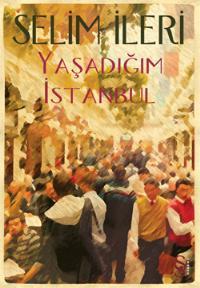
Yaşadığım İstanbul
Selim İleri
İstanbul'un Kırık Kalbi: Selim İleri'nin Hafıza Kazısı Bazı yazarlar vardır ki bir şehirle öylesine özdeşleşirler, sanki o şehrin sokakları onların damarlarında akar. Selim İleri de,
İncelemeyi Oku