




Throughout human history, women's fertility and the source of creation have been addressed across a wide spectrum — from mythological narratives to philosophical systems, from divine texts to works of art. These themes reflect not merely a biological reality, but humanity's search for the meaning of existence. The Quran reinterprets this deep-rooted tradition through a monotheistic lens, presenting the creation of humanity and women's fertility as concrete manifestations of God's power in the world. In this context, verse 223 of Surah Al-Baqarah carries an exceptionally layered meaning — historically, theologically, and culturally. The Vegetal Creation of Humanity: A Journey from Earth to Soul The Quran conveys the creation of humanity as an interconnected, gradual process. In Surah Fatir it is declared: "He created you from dust, then from a drop of fluid, then He made you into couples." This verse expresses that human existence begins with earth, takes shape through water, and finds meaning as pairs. In Surah Nuh, this creation is described as follows: "God caused you to grow from the earth like a plant. Then He will return you to it and bring you out again." Read together, these two verses reveal that human existence has not a linear but a cyclical structure: emergence from earth, return to earth, and resurrection. In this sense, the human being resembles a plant — more than an animal — in its existential journey. Just as a seed is planted in suitable soil, nourished by water, takes root, and eventually bears fruit, the human being is part of a similar process. The womb corresponds to soil; sperm to the seed deposited in that soil; amniotic fluid to the water that nourishes it; and the soul to the divine breath that gives that seed life. This comparison is not merely a literary figure of speech — it articulates an ontological reality. The essence of life lies not in the chemical combination of atoms, but in the manifestation of God's command "kun fayakun" — "Be, and it is" — within that being. The human body originates physically from earth; the soul comes into existence through divine grace. Baqarah 2:223 and the Multi-Layered Meaning of the "Farmland" Metaphor "Your women are a farmland for you. So approach your farmland however you wish. And send ahead for yourselves. And fear God, and know that you will meet Him. And give glad tidings to the believers." This verse is among the most debated and most misunderstood verses in Islamic thought. Although it is often interpreted in Western and atheist circles as reducing women to an object, a deep layer of meaning — pointing to the exact opposite — emerges when the context of the text, the Arabic word choices, and the Quran's general teaching are taken into account. The word at the center of the verse, "hars," is translated into English as "farmland" or "field." However, this word encompasses not merely a piece of land, but also productivity, the potential for abundance, the continuity of life's cycle, and the reward for labor. In agricultural societies, the field is a place where life continues, where labor finds meaning, and where generations are nourished. Describing women through this metaphor is not a degradation — it is placing her at the center of life, at the source of abundance, in the role of bearer of generational continuity. Moreover, when the verse is read in its entirety, it is clear that it addresses not only sexuality but its moral and spiritual dimensions as well. The phrase "fear God" indicates that this union must be lived with a sense of responsibility; the warning "you will meet Him" reminds that every action carries its reckoning in the afterlife. Thus, sexuality in the Quran moves beyond being a matter of mere pleasure and becomes a sacred trust intertwined with spiritual responsibility. The verse's final line — "give glad tidings to the believers" — is a reward granted to those who carry this responsibility and live the marital relationship with God-consciousness. When all these elements are considered together, it becomes clear that far from devaluing women, the verse places the respect owed to her upon a divine foundation. Women and Earth: A Deep-Rooted Bond Stretching from Mythology to the Quran The identification of women's fertility with the earth is not an approach unique to the Quran. It is a deeply rooted universal motif extending to the oldest civilizations in human history. In Sumerian mythology, Ninhursag is the life-giving "earth mother," goddess of both birth and fertile land. Anatolia's Cybele represents the cyclical power of life and nature as the great mother goddess. Egypt's Isis, as guardian of death and rebirth, symbolizes the transformative power of women. India's Prithvi is the earth itself; Greece's Demeter is the goddess of the earth and the abundance of the harvest. What these figures share is that they position women not as an "object" or "tool," but as a "source" and "center." In these narratives, woman is the essence of life, abundance, and continuity. The Quran inherits this rich symbolic legacy but carries it into a monotheistic framework. Women's fertility is no longer a "goddess power" but the manifestation of God's creative might in the human world. This transformation does not eliminate women's status; on the contrary, it places her upon a firmer and deeper foundation. Women, the Moon, and Cosmic Cyclicality Throughout history, many cultures have identified women with the moon. The basis of this analogy lies in the alignment of women's biological cycle with the lunar calendar — yet the meaning is not solely biological. The moon gives light in darkness, shows direction, gives meaning to the night. Similarly, women bring a new life into being in the dark and unknown beginning of existence — namely, in the womb. The figures of Parvati in Hindu mythology, Selene in Greek tradition, Luna in Roman, and Mahina in Hawaiian culture exalt women as beings who illuminate, bring peace, and symbolize cyclicality. In Chinese philosophy's Yin-Yang understanding, the "yin" principle represents the feminine: dark, moist, receptive, transformative. This principle is not a deficiency or weakness, but an essential pole that sustains the balance of existence. To receive, to transform, to produce, to nurture — these are the qualities of yin, and they simultaneously define woman's existential mission. When the Quran's "farmland" metaphor is read in parallel with this cosmic framework, the meaning deepens further. Women are not merely bearers of a biological productivity, but of a cosmic function that sustains the balance of creation. She is an indispensable note in the divine symphony that ensures the continuity of existence. A Theological Reading: Piety, Trust, and Accountability The theological depth of Baqarah 2:223 is not limited to the "farmland" metaphor alone. When the verse is read in its entirety, it becomes clear how the Quran frames sexuality. In this verse, sexuality is addressed in three fundamental dimensions: biological productivity, moral responsibility, and awareness of the afterlife. The command "fear God" expresses that the relationship must be lived with consent, respect, and consciousness. This call to piety emphasizes that the female body is a trust to be approached not carelessly but with care. The reminder "you will meet Him" reveals that every action carries a divine reckoning, and that this reckoning encompasses even the most intimate spheres of daily life. Thus, sexual union ceases to be a means of pleasure and becomes a conscious and responsible form of participation in God's plan of creation. Viewed from this perspective, the verse stands not as a text that devalues women, but as one that underscores that respect for her is a divine requirement. Woman, at the Center of Existence The Quran's description of women as "farmland" may, on a surface reading, appear to be an expression prone to misunderstanding. However, reading this metaphor within its historical, cultural, and theological context reveals an entirely different picture. In this verse, women are not an object, but a symbol of the place where life is sustained, where abundance exists, and where lineage continues. The human being is a "seed" created from earth; women is the "womb-soil" that grows that seed. Both are different manifestations of God's command "kun fayakun." The emergence of the human from earth and return to it, alongside the continuation of the lineage that comes forth from women's womb — these are two faces of the same divine cycle. In this verse, women is patient and productive like the earth, purifying and life-giving like water, and in darkness a guide and source of peace like the moon. Modern critiques most often remain on the surface by interpreting this figurative language literally. Yet the Quran presents women as a "source of abundance" in both the biological and spiritual sense. The "farmland" analogy is a metaphor that does not diminish women — it places her at the center of existence and honors her fertility and productivity. To put it in the Quran's own terms: women are the most beautiful and most profound manifestation of God's power, mercy, and creation in this world.

KİTAP İZLERİ
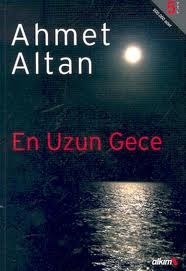
En Uzun Gece
Ahmet Altan
Aşkın Karanlık Coğrafyası: Ahmet Altan'ın "En Uzun Gece"si Töre cinayetlerinin gölgesinde akan bir tutkunun trajik öyküsü Ahmet Altan'ın "En Uzun Gece"si, aşkın ve acının iç
İncelemeyi Oku