


Validity Conditions of Worship According to the Quran One of the most deep-rooted debates in the Islamic world, continuing for centuries, concerns which acts of worship are grounded in the Quran and which were incorporated into religious life later through hadith and narration culture. In a Quran-centered approach, for a religious practice to be considered an act of worship, two fundamental conditions must be met. First, the act must be defined by a clear and firm (muhkam) verse in the Quran. Second, how to perform it must also be described with equal clarity in the Quran. The absence of either condition renders the practice invalid as a religious obligation from a Quranic perspective. The Quran explicitly declares itself to be a complete guide: "We have neglected nothing in the Book." (An'am 38). This principle makes the question of whether practices like animal sacrifice and Eid al-Adha rest on a firm Quranic ruling critically important. The Surah Al-Kawthar and the Problem of Traditional Interpretation One of the primary sources traditionalists cite for the act of sacrifice is Surah Al-Kawthar. The commonly accepted translation reads: "Indeed, We have granted you Al-Kawthar. So pray to your Lord and sacrifice. Indeed, your enemy is the one cut off." However, to question the accuracy of this translation, one must jointly evaluate the context of the surah's revelation, the conditions of the era, and the linguistic content of its key words. Surah Al-Kawthar is the fifteenth in the order of revelation and among the earliest surahs revealed in Mecca. The early years of Islam were a period when the belief in monotheism was just being established and the Prophet Muhammad was struggling against severe pressure and slander. In this period, the core content of revelation was the oneness of God, consolation for the messenger, and a call to faith. Revealing legal rulings in such an environment — where belief had not yet taken root — would mean imposing obligations before the faith was firmly established, which contradicts the Quran's general pedagogical method. The Word "Kawthar" Kawthar is derived in Arabic from the faw'al pattern, formed with the kathrah template, meaning "extremely abundant, very plentiful." Traditionalists interpret this word as a river in paradise. However, looking at the Surahs Ad-Duha and Ash-Sharh, which were revealed before Al-Kawthar, we see that the blessings given to the messenger are listed concretely: being sheltered when an orphan, being guided when astray, being enriched when poor, receiving revelation, the expansion of the chest, the lifting of burden, the exaltation of name. Kawthar is the totality of all these abundant blessings — not a river in paradise. The Word "Salât" Recorded in Arabic dictionaries as carrying 18 different meanings, the word salât is translated by traditionalists solely as "prayer" (namaz). Yet the word has a rich range of meanings: to pray, to support, to exalt, to protect, to deliver a speech. Verse 56 of Surah Al-Ahzab illustrates this point strikingly: "Indeed, Allah and His angels send salât upon the Prophet." If salât meant only ritual prayer, this would produce the fundamentally erroneous meaning that God and the angels perform ritual prayer for the Prophet. In this verse, salât clearly means offering support and help. Therefore, when God commands the messenger to perform salât, He is asking not merely for ritual prayer, but for supplication, for supporting and exalting Islam, and for strengthening the believers. The Word "Wanhar" The word on which the claim that the surah contains a command to sacrifice rests is wanhar — the imperative form of the verb nahara. Traditionalists translate this word directly as "sacrifice an animal." However, the word's meanings in Arabic dictionaries span a very broad range: to stand upright, to turn the body toward the qibla, to place the hands on the chest, to face straight ahead without turning left or right, to stand firm, to not submit to the desires of the self. The word's most widely used meaning as a verbal noun is "to face, to confront breast to breast." The conditions of the period of revelation and the surah's general context strengthen this interpretation: the Prophet Muhammad was facing severe pressure from society and was being belittled as "cut off" due to the death of his son. In this surah, God was consoling the messenger, supporting him, and commanding him to stand firm against hardships. A command to slaughter an animal is incongruent with this context. Within this framework, the correct translation of Surah Al-Kawthar should be: "Indeed, We have given you abundant blessings. So perform salât for your Lord and stand firm against the hardships you will face! Indeed, it is the one who degrades you who is truly cut off." The Use of the Word "Sacrifice" in Translations: A Linguistic Problem When the verses associated with the act of sacrifice in the Quran are examined, it becomes clear that the Arabic word "kurban" (sacrifice) does not appear at all in the original Arabic of these verses. Traditionalist commentators translate eight different Arabic words — nüsük, mensek, hedy, zibh, nahr, udhiye, and others — all as "sacrifice," thereby constructing a worship practice and its obligation that does not exist in the Quran. One of the fundamental principles of linguistics and semantics is: different words point to different meanings. To ignore this principle and reduce eight words that are distinct in meaning and root to a single concept is a serious methodological error. Looking at concrete examples, the picture becomes even clearer. The word hedy in Surah Al-Baqarah verse 196 means "to guide, to gift, to send" in the dictionary and should correctly be rendered as "send whatever gift is easy for you"; yet in traditionalist translations it is given as "sacrifice." The same word hedy appears in Surah Al-Ma'idah verse 95 and suffers the same distortion. In Al-Ma'idah 97 and in verses 28 and 36 of Surah Al-Hajj, the same situation occurs; words like bahîmati'l-an'âm — meaning the plural of animals such as camels, cattle, and sheep — are translated directly as "sacrificial animals." The Inconsistency of the Schools of Jurisprudence: An Admission of the Absence of Quranic Proof The fact that traditionalist circles adopt different rulings across jurisprudential schools on the matter of animal sacrifice is an indirect acknowledgment that this act of worship lacks a solid foundation in the Quran. According to the Shafi'i school, sacrifice is not obligatory (fard); Shafi'i scholars interpreted the word wanhar not as slaughtering an animal but as raising the hands to the chest during prayer. In the Hanafi school, sacrifice is considered wajib (necessary), while in the Maliki and Hanbali schools it is regarded as sunnah. This profound disagreement clearly shows that the jurisprudential rulings of the schools are fed not by the Quran but by narration culture, and that it is not possible to derive a definitive and binding ruling from the Quran on this matter. Indeed, even a deeply rooted traditionalist commentator like Fakhr ad-Din ar-Razi noted that restricting the word mensek in Surah Al-Hajj verse 67 solely to sacrifice is not correct. According to Razi, mensek is a broad concept that can refer to any act of worship. The True Meaning of "Sacrifice" (Kurban) in the Quran The word kurban derives in Arabic from the root k-r-b, meaning "to approach, to be near," and encompasses every type of deed performed to draw closer to God. Traditionalists, under the influence of hadith culture, have reduced this concept solely to the act of "slaughtering an animal." Yet this narrowing damages the word's original richness of meaning and the Quran's holistic message. Every act of worship, every righteous deed, every act of self-sacrifice performed to draw closer to God can be considered a kurban in this sense. Eid al-Adha and the Eid Prayer: Are They in the Quran? Eid al-Adha and Eid al-Fitr are not mentioned in the Quran. Per the Quran's fundamental principle, if an act of worship has been made obligatory by God, both its definition and the manner of its performance must be clearly stated in the Quran. Within this framework, no practice that is not established by a firm Quranic verse — such as the Eid al-Adha prayer, kandil nights, and similar observances — can be accepted as a religious obligation. God did not grant the messenger authority to establish rulings in the name of religion. "I only follow what is revealed to me." (An'am 50) and "Follow what has been revealed to you from your Lord." (Al-Ahzab 2) — these verses confirm this truth. Consequently, the jurisprudential rulings based on hadith and narration culture have no binding force from a Quranic standpoint. The Social Dimension: Worship of Uncertain Origin vs. Genuine Solidarity Traditionalists sometimes draw attention to the social dimension of the practice of sacrifice, arguing that the poor are able to eat meat. However, this argument is self-contradictory. This understanding of "generosity," recalled only once a year, is incompatible with the Quran's vision of continuous and systematic social justice. If the Quran's economic and social rulings were genuinely applied to social life, the poor would be able to meet their basic needs every day of the year. Furthermore, in many Muslim societies — particularly in Anatolia — it is observed that people take interest-bearing loans from banks and then proceed to slaughter a sacrifice, all without knowledge of Quranic rulings. Interest is explicitly prohibited in the Quran. In this case, committing a forbidden act for the sake of a practice that is neither obligatory nor established as sunnah is a deeply troubling contradiction. Conclusion The act of animal sacrifice and Eid al-Adha have not been defined by a firm Quranic verse, nor has the manner of their performance been clearly described. The words translated as "sacrifice" consist of eight distinct Arabic words with different meanings in their original; the principles of linguistics and semantics demonstrate that these words cannot be reduced to a single ruling of "slaughter an animal." The context of Surah Al-Kawthar's revelation, the conditions of the era, and the broad semantic ranges of its key words all indicate that the surah contains not a command to sacrifice, but a call to stand firm against hardships and to support Islam. The disagreements among jurisprudential schools on this matter are clear evidence that the practice cannot be grounded on firm Quranic proof. "And do not say, regarding what your tongues falsely describe: 'This is lawful and this is forbidden,' so that you invent lies against God." (An-Nahl 116) The Quran is a complete and sufficient guide for believers. "Is it not enough for them that We have sent down to you the Book which is recited to them?" (Al-'Ankabut 51) This call places before us, in every age and every generation, the responsibility to rebuild religious life centered on the Quran.

KİTAP İZLERİ
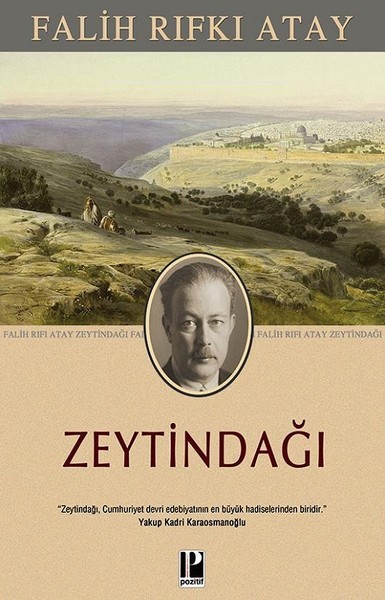
ZEYTİNDAĞI
Falih Rıfkı Atay
Bir İmparatorluğun Veda Mektubu: Falih Rıfkı Atay'dan Zeytindağı Her milletin tarihinde, hatırlamaktan kaçındığı, üzerine bir sessizlik perdesi çekmeyi yeğlediği dönemler vardır. Bizim için Osmanlı İmparatorluğu'nun
İncelemeyi Oku