




Mushrik: The Anatomy of Spiritual Downfall The existential journey of the human being is, at its core, a process of discernment. To define the boundaries between right and wrong, love and lust, the divine and the worldly — this is humanity's oldest and most fundamental concern. Yet these seemingly simple distinctions frequently blur within the complex fabric of the human heart. Particularly when love and spiritual devotion are at stake, a person can easily lose their center and, unknowingly, fall into the dark abyss of shirk. In Islam, the term shirk is used to describe this dangerous drift. Literally meaning "partnership," shirk carries a far deeper theological significance: associating partners with Allah. Yet this is not always a conscious choice. More often, it is a silent deviation that settles into the heart unnoticed — a blind wandering. Shirk: The Anatomy of Spiritual Collapse Shirk is the first sign of a destruction that begins within the inner world of the human being. The Qur'an, in Surah Al-Hajj, verse 31, describes the terrifying nature of this danger through a powerful metaphor: "Hanifs are those who do not associate partners with Allah. And whoever associates partners with Allah is like one who has fallen from the sky — and the birds snatch him, or the wind sweeps him to a remote place." This verse signals that shirk is not so much a physical catastrophe as it is a spiritual collapse. The person falling from the sky — this is not merely a bodily death, but a ruin of the soul. A being snatched by a bird, swept away by the wind, no longer belongs to itself. It becomes an entity moved without will, an existence with no owner. Shirk begins at the level of the heart. For another love to take the place of the love of Allah is not simply a religious error; it is the displacement of the human being's own center. As long as one exists, one is a creature searching for a center, seeking an anchor. If that center is not Allah, the person clings to other centers: a human being, an image, a passion, an excitement. "Even though in the world they may chase a fragment of happiness," the one who has fallen into shirk "is ultimately swept into a great emptiness." This contradiction is the deepest tragedy of the human soul's spiritual makeup — because every attempt to fill that emptiness only creates deeper voids. Love: The Gateway to the Most Dangerous Deviation Love has been the central subject of art, literature, and philosophy throughout human history. Yet from an Islamic perspective, love — when not properly oriented — is the emotion most swiftly leading the human being into shirk. What is love? In Hegel's words, it is the human endeavor to find oneself in another being. Yet this is philosophically paradoxical: to seek one's own existence in the existence of another is inevitably to lose one's own existence. The words of Turkish classical music artist İbrahim Tatlıses — "No branch left for me to hold, I have withered like a tree" — point to the very heart of this paradox. While clinging to the one they love, the person is in truth drying themselves out. Every act of clinging is simultaneously a dissolving; every attachment, a diminishment. The Process by Which Love Transforms Into Shirk Love undergoes an imperceptible transformation over time. At first, when the beloved enters the heart, the person calls it "affection." Yet gradually, that affection turns into "obsession," and then into "worship." And it is at that moment that shirk begins. "The moment shirk begins is the moment the beloved is the very first thought to cross one's mind." This point is critical. For the Qur'an warns the human being: "And among the people are those who take other than Allah as equals to Him, loving them as they should love Allah." (Al-Baqarah: 165) This verse is clear on the matter of love's rightful object. Love must hold Allah at its center. Every other love must be a reflection of this supreme love. Otherwise, love ceases to be a servant and becomes a lord. While attaching to the beloved, the person — consciously or not — deifies them. They strive to see the beloved as flawless, turn a blind eye to their faults, and relinquish everything for their sake. This is the purest form of deification. The Trap of the Image: Images That Vanish Like Shadows The mushrik, more often than not, begins to cling to an image. The physical beauty of the beloved, their mannerisms, their words — these images become an icon at the level of the heart. "The person clings tightly to the image and leans their back against it." Yet this image is, by its very nature, transient. Like a shadow, it appears with the sun and disappears with the sun. In time, the beloved changes, ages, grows, departs — or the person's initial enchantment shatters and they begin to see reality. And at that moment — the moment the shadow vanishes — the person enters free fall. "The shadow eventually disappears and the person goes into free fall. It is then that the person comes face to face with spiritual emptiness." This emptiness is not a physical void. No crowd at a bus stop, no gathering of friends, no new love can fill it — because the emptiness is interior. The Nature of Melancholy: The Crystallization of Pain Shirk, at the outset, is painful. But this pain is significant precisely because it is a pain gone unrecognized and unprocessed. Over time, this pain transforms into melancholy. The etymology of melancholy — "black bile" — is the embodied form of the human being's emotional state. The melancholic person lives an endless grief; within this grief, causality remains obscure. Yet the melancholy caused by shirk is different: its source is clear — it arises from the heart being structured around a false center. "Melancholy is the outward reflection of the emotional state the person inhabits. The melancholic person internalizes their pain and continuously relives it." That is, the melancholic person does not merely feel their pain — they exalt it, make it an identity. They identify with their own suffering. In time, this pain subsides. The person "washes their face and comes to their senses." Yet here lies a critical point: "The person who does not know why pain has besieged their heart will make the same mistake again when they encounter another image." This is the most bitter cycle repeated throughout human history. The heart does not burn again because it did not bleed — but because it attributed the bleeding to the wrong cause. The person does not see the source of shirk; they only appear to have seen its symptoms. And no sooner does one wound heal than they begin to open a new one. True Love: A Life Centered on Allah The Qur'an clearly shows the way to break this curse: "But those who believe are stronger in love for Allah." (Al-Baqarah: 165) This is not merely a matter of love's direction — it is a hierarchy of love. True love is not a circle but a pyramid. The apex points toward Allah. All other points of the pyramid — people, beings, emotions — are arranged neatly around this center. Each love is accountable to this central love. Each attachment is but a branch of this supreme devotion. "Love must be directed not to the beloved, but solely to Allah." This does not mean forbidding the love of human beings. On the contrary, it means making the love of human beings wholesome. For to love a person within the framework of one's devotion to Allah means accepting that person's faults, shortcomings, and transience as well. This love is not the deification of the other, but the art of loving them within their human limitations. "True love is love for Allah, and this love eradicates every form of shirk and deviation." Why? Because love directed toward Allah is an infinite love. Every love tied to the finite finds its rightful place before this infinity. No human being can claim to deserve this love. No beauty can personify it. Breaking the Vicious Cycle: The Necessity of Inner Inquiry "Without descending into the depths of the human heart, one cannot find peace through external consolations." The modern world offers countless ways to distract on the surface rather than descend into the depths of the heart. A telling observation: a person in depression enters a new relationship and cheers up somewhat. One might take this for healing. Yet it is false healing — because the heart has never descended into its own depths to look at the root cause. It has merely been covered over by another image. True healing comes when one questions their heart. "Why did I associate a partner with Allah? Why did I deify another? What should the center of my heart have been? Why did I cling to other centers?" When the answers to these questions are sought, the person begins a genuine transformation. This transformation is, in a sense, a spiritual excavation. The person begins to remove all the false attachments, all the counterfeit loves, all the erroneous centers that have accumulated in the depths of the heart. This is painful. Deeply painful. Yet this pain is healing. The Soul's Beggary: A Pile of Stones Against the Void The mushrik — at the outset, the person infatuated with their beloved — seeks "a shoulder": "The soul, trapped in the hidden corners of the heart, turns outward, joining streets, stones, and people." This is a powerful image. The soul within the heart begins to seep outward. Why? Because the inner world has been corrupted; its center has been lost. The soul begins to search outside for what it has lost inside. It is then that the person begins to cling to "stones" — not only to people, but to objects, to habits, to work. Whatever they cling to, the person always receives the same pain in return. "They seek a shoulder, but that shoulder too offers them no real solution." Because the problem is not in the shoulder. The problem is that, with each shoulder shared, the person still carries the same defect of the heart. The Qur'an's Warning: The Reality of Torment Surah Al-Baqarah, verse 165, is not merely a warning — it is also a system of signs: "If only those who have wronged would see, when they see the punishment, that power belongs entirely to Allah and that Allah is severe in punishment." What is this "torment"? Is it a punishment in the hereafter, or is it the state of the soul lived in this very world? Perhaps both. For if the center of the heart has been displaced, what else can come from that heart? A melancholic life, hollow relationships, an endless search, desires that are never satisfied — these are the worldly torment of shirk. The Heart Must Be Filled with Nothing But the Love of Allah The human heart cannot house more than one center under its roof. If Allah is not at the center, other things begin to pile up there without a roof. "In this world where love and shirk are intertwined, the human heart must be filled solely with the love of Allah — and every external love and attachment must go no further than being an imitation of this supreme love." This does not deny love between human beings. On the contrary, it places it within a proper framework. Spouse, child, friend, mother — all these loves become clear in the light of love for Allah. They are sacred bonds, yet only on the condition that they remain the arms and servants of devotion to Allah. Throughout history, humanity has tried to forget this truth and has collapsed every time; and when it begins to remember, it has been able to rise again. For the very reason for the human being's existence lies in this center. The one who has found their center has found beauty; the one who has lost their center has, as Tatlıses said, "withered like a tree." Only when the human being finds Allah in the depths of their heart do they discover, together with their truest existence, meaning and peace. This is the fundamental law of the human soul's spiritual makeup — and, unfortunately, it is most often recognized far too late.

KİTAP İZLERİ
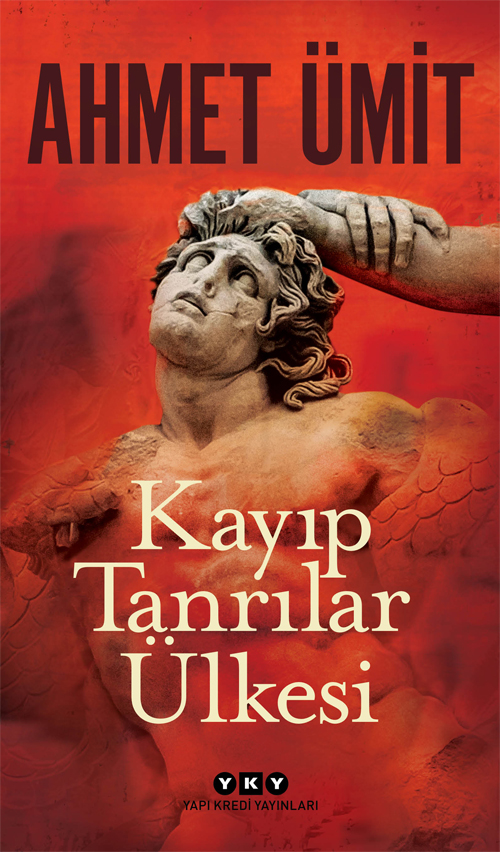
Kayıp Tanrılar Ülkesi
Ahmet Ümit
Zeus Berlin Sokaklarında: Ahmet Ümit'ten Mitoloji, Cinayet ve Hafıza Üzerine Bir Roman Ya eski tanrılar ölmemiş, sadece unutulmuşsa? Ve içlerinden biri, bu umursamazlığa öfkelenip modern
İncelemeyi Oku